

Mahtta & Co.

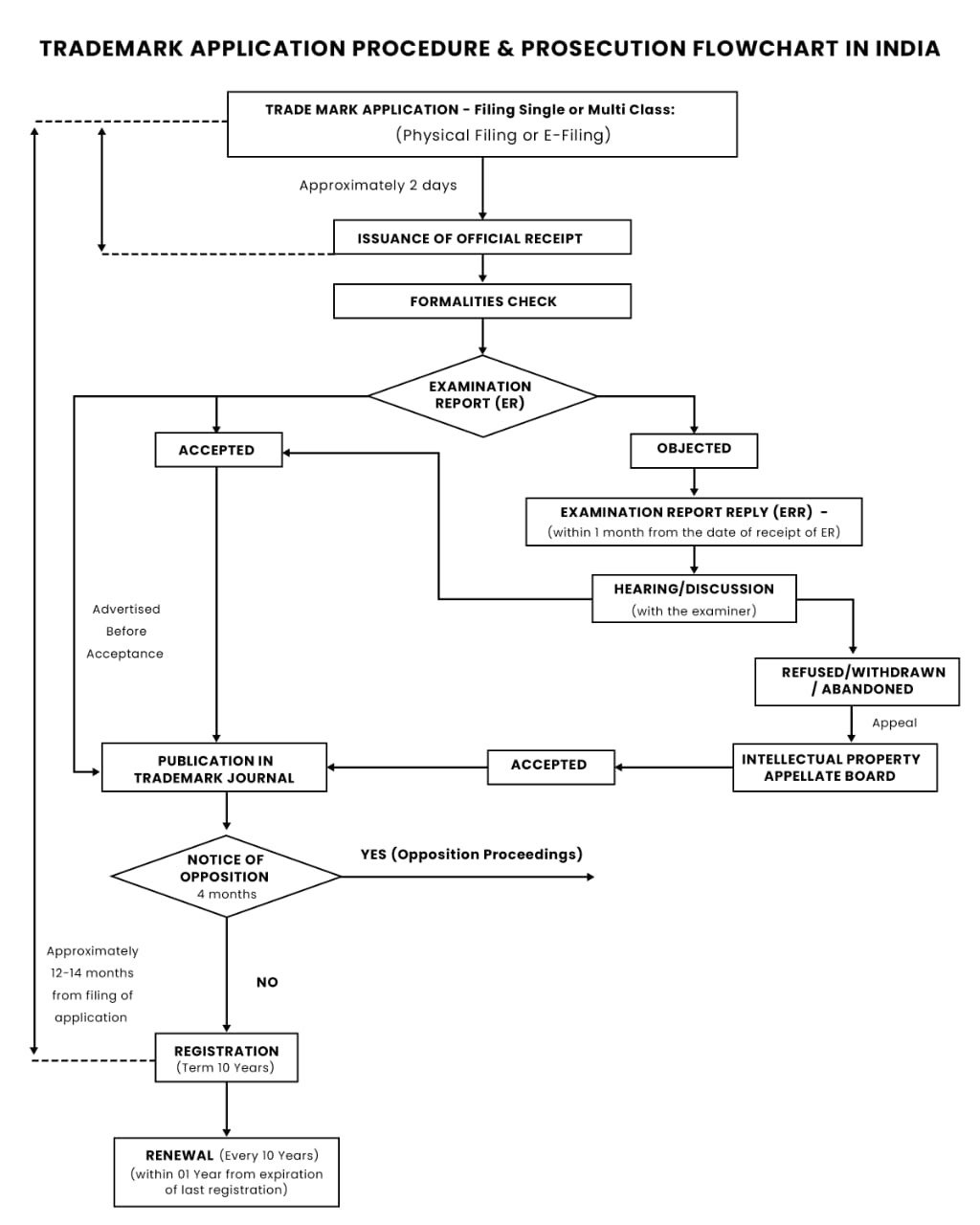
Trademark Application Procedure and Prosecution Flowchart

This Trademark Flowchart simplifies the often complex and lengthy procedure into a clear, step-by-step guide. It helps applicants stay on track, reduce errors, and avoid unnecessary delays. Whether you’re filing for a new trademark or responding to an office action, this flowchart serves as an invaluable tool to help you navigate the Indian trademark system with ease.


Get more details

What is a Trademark Flowchart?

Step 1: Filing the Trademark Application

The first step in the trademark process is filing the trademark application. In India, you can file a trademark application for a single class or multiple classes. The application must include all the necessary documents, including details about the trademark, the applicant, and the goods or services associated with the trademark. Once the application is filed, the Registry of Trademarks issues an official receipt. This receipt acknowledges that your application has been officially submitted and is now in process. At this stage, the Trademark Flowchart ensures that all required documents are filed in the correct format and that the application is complete.

Step 2: Formalities Check Pass

After the trademark application is filed, the next stage is the Formalities Check Pass. This is where the trademark office verifies whether the application has been filed in the prescribed manner. They check if all the necessary documents are in order, the correct fees have been paid, and the application complies with the procedural requirements. If everything is in order, the application passes the formalities check and moves forward to the next stage. If there are any discrepancies or missing documents, the applicant will be notified and required to make the necessary corrections.

Step 3: Examination of the Trademark

Once the application has passed the formalities check, it enters the Examination phase. During this stage, the trademark examiner reviews the application to determine whether it qualifies for registration. The examiner looks for any issues with the trademark that may prevent it from being registered, such as conflicts with existing trademarks or non-compliance with trademark laws. If the examiner identifies any objections, they issue an Examination Report, also known as an office action. The examination report lists the reasons for objection, such as a likelihood of confusion with existing marks, lack of distinctiveness, or failure to meet legal requirements.

Step 4: Responding to the Examination Report

If you receive an examination report, you must respond within one month from the date of receipt. The response to the office action must address all the objections raised by the examiner. This is a crucial step, as failure to respond within the given timeframe can lead to the abandonment of your trademark application. Once the response is filed, the examiner reviews the reply. If satisfied with the explanation or amendments provided, the examiner moves the application forward. If the objections are not resolved, the examiner may schedule a hearing to further discuss the case.

Step 5: Advertisement in the Trademark Journal

Once the examiner is satisfied with the response, they proceed with advertising the trademark in the Trademark Journal. This publication gives the public an opportunity to view the trademark and raise any objections. The advertisement in the Trademark Journal is a critical step in the Trademark Flowchart, as it allows third parties to file an Opposition if they believe the trademark infringes upon their rights or is not eligible for registration.

Step 6: Opposition Period

The opposition period lasts for four months from the date of publication in the Trademark Journal. During this time, any third party can file an opposition against the registration of your trademark. If no opposition is filed within this period, the trademark proceeds to registration. If an opposition is filed, the applicant must respond to the opposition within the prescribed time, usually within two months. The opposition is then examined, and if the opposition is unsuccessful, the trademark proceeds toward registration.

Step 7: Trademark Registration

If no opposition is filed or if the opposition is successfully overcome, the trademark proceeds to the Registration stage. Once the trademark is registered, it is granted legal protection and is valid for a period of ten years from the date of filing. The registered trademark holder enjoys exclusive rights to use the mark for the goods or services it is associated with, and can take legal action against any infringement.

Why Use a Trademark Flowchart?

Conclusion

Mahtta & co

Mahtta & Co. is a leading Intellectual Property law firm in India, providing trademark, patent, copyright, and design legal services to global clients.

Copyright © 2026, Mahtta. All Rights Reserved | Developed by Onlincer